
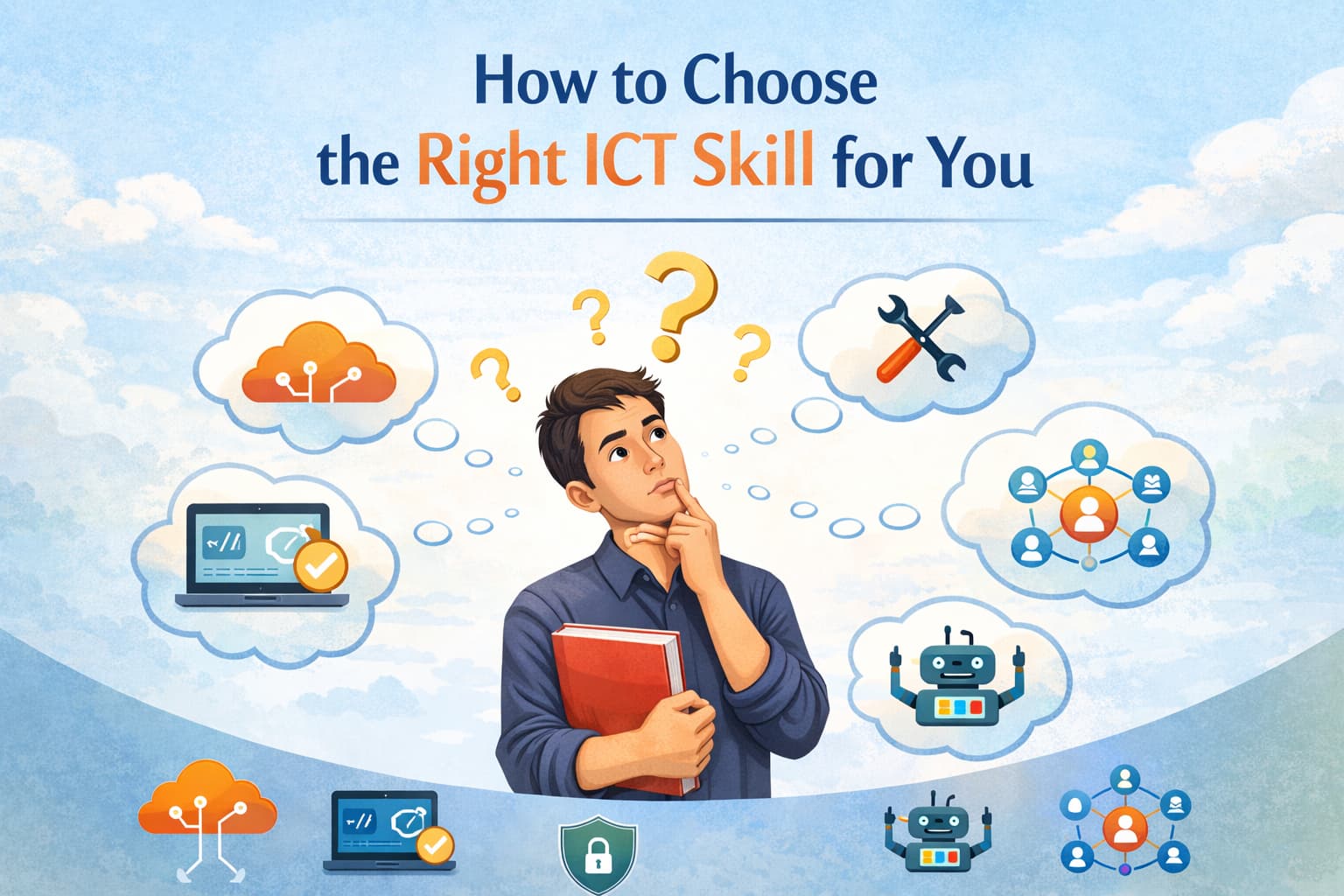
Choosing an ICT skill isn’t about chasing trends or copying what everyone else is doing. It’s a strategic decision—one that should align who you are, where the market is going, and what you can realistically sustain over time. Done right, it becomes a career asset. Done poorly, it becomes another abandoned course folder.
Here’s a practical, no-nonsense framework to guide the decision.
1. Start with Self-Awareness, Not Hype
Technology rewards consistency more than excitement. Before looking outward, look inward.
Ask yourself:
- Do I enjoy problem-solving, creativity, analysis, or structure?
- Am I more comfortable with numbers, words, design, or systems?
- Do I prefer working independently or collaboratively?
For example:
- If you enjoy logic and structure → Programming, Backend Development, Data Analysis
- If you enjoy creativity → UI/UX Design, Graphic Design, Frontend Development
- If you enjoy order and coordination → Project Management, IT Support
Be honest. The market eventually exposes mismatches.
2. Study Market Demand, Not Noise
Some skills sound impressive but have limited demand locally or globally. Others may look basic yet offer steady opportunities.
Currently, high-value ICT skills cut across:
- Data Analysis & Data Science
- Software Development (Frontend, Backend)
- Cybersecurity
- Cloud Computing
- Digital Design & Product Design
- IT Support & Systems Administration
A skill with demand ensures relevance; demand with scarcity ensures leverage.
3. Match Skill Complexity with Your Timeline
Not all ICT skills mature at the same pace.
- Short-term (3–6 months):
Digital marketing, basic IT support, graphic design, no-code tools. - Mid-term (6–12 months):
Frontend development, data analysis, UI/UX. - Long-term (12+ months):
Backend development, cybersecurity, AI, cloud engineering.
Choose based on your patience, resources, and urgency—not ego.
4. Consider Your Environment and Access
A good skill poorly supported becomes frustration.
Evaluate:
- Availability of training, mentors, and communities
- Access to tools, devices, and internet
- Local opportunities for practice, internships, or projects
Skills grow faster in supportive ecosystems.
5. Think in Terms of Transferability
The strongest ICT skills are adaptable across industries—education, finance, healthcare, governance, and business.
For example:
- Data analysis works everywhere data exists.
- Software development powers nearly every sector.
- Cybersecurity grows as digital systems expand.
Choose skills that travel well.
6. Pilot Before You Commit
Before fully committing:
- Take an introductory course
- Try a small project
- Watch yourself over 2–4 weeks
If curiosity fades quickly, that’s valuable feedback. Listen to it.
References
- World Economic Forum (2023). The Future of Jobs Report.
- McKinsey & Company (2022). Defining the Skills Citizens Will Need in the Future World of Work.
- OECD (2021). Skills for a Digital World.
- IBM Skills Build. Digital Skills Pathways and Career Mapping.
- Coursera Research (2023). Global Skills Report.